- Wise Words Weekly
- Posts
- Robert Kiyosaki's Wise Words On What You Need To Have To Be Successful
Robert Kiyosaki's Wise Words On What You Need To Have To Be Successful
📈Your Path to Constant Progress & Improvement

Grant Shay
July 08, 2025
A powerful quote, a simple action, and a spark to ensure your continued progress—welcome to Wise Words Weekly!
🤔Every week, we disect, investigate, and unpack a wisdom-packed quote from a wise, successful, and inspirational person. We explore many different self-development topics such as your Personal Growth, Mindset, Well-Being, Relationships, Leadership, and Gratitude. The Wise Words Weekly newsletter is designed to spark your continued progress, one small step at a time. 📈 None of this content should be construed as any type of investment or other professional advice. If you like quotes as much as we do, you may enjoy our Wise Words YouTube channel, too. Click here to check it out.
This week, we’re diving into Mindset.
🔥Quote of the Week:
“You need to have the courage to fail.” - Robert Kiyosaki

🤔Reflection:
This Kiyosaki quote hits hard in a world obsessed with perfection. Failure feels like a scarlet letter, something to avoid at all costs. But what if we’ve been looking at it wrong? Failure isn’t the opposite of success, it’s the foundation of it. Every misstep, every rejection, every “oops” moment is a chance to learn, pivot, and grow. Kiyosaki’s words remind us that courage isn’t about avoiding failure but stepping into it, knowing it’s a teacher in disguise.

Think about your own life: when did you learn the most? Probably not when everything went smoothly. It’s the moments when you stumbled, missed a deadline, bombed a presentation, or took a risk that didn’t pan out, that shaped you. It’s called experience. These experiences build resilience, mindset, and wisdom you can’t get from a textbook. Embracing failure means trusting that every setback is setting you up for something bigger.
The fear of failure can paralyze us, keeping us in safe, predictable lanes. But safe doesn’t lead to breakthroughs. Kiyosaki’s challenge is a call to reframe failure as a necessary part of the journey. It’s not about being reckless but about being bold enough to try, even when the outcome isn’t guaranteed. What would you do if you weren’t afraid of falling? This mindset shift isn’t easy. It requires unlearning years of conditioning from the school system and society in general that equate mistakes with weakness. But once you start seeing failure as a stepping stone, you unlock a new kind of freedom. You’re no longer shackled by “what if it doesn’t work?” Instead, you’re fueled by “what if it does?”

🏆Why This Can Be Your Superpower
The courage to fail gives you an edge in a world where most people play it safe. When you’re willing to take risks, you open doors others won’t even knock on. This isn’t about being fearless—it’s about acting despite fear. That’s what separates dreamers from doers. While others wait for the perfect moment, you’re out there experimenting, learning, and iterating.

This superpower builds resilience like nothing else. Each failure you face and overcome makes you stronger, more adaptable, and better equipped to handle life’s curveballs. Over time, you develop a mental toughness that lets you tackle bigger challenges with confidence. It’s like a muscle: the more you use it, the stronger it gets.
It also fosters creativity. When you’re not afraid to fail, you’re free to think outside the box, try unconventional approaches, and take leaps others might shy away from. Some of the greatest innovations—think Post-it Notes or penicillin—came from “failures” that turned out to be game-changers. Your willingness to stumble could lead to your greatest breakthrough.
Finally, this courage makes you a leader. People are drawn to those who take risks and own their mistakes. By showing that failure isn’t fatal, you inspire others to step out of their comfort zones. Your superpower isn’t just about you—it’s about lighting the way for others to be bold, too.

🔬The Science Behind It
Neuroscience backs up why embracing failure is so powerful. When you fail, your brain doesn’t just shut down—it goes into overdrive. The prefrontal cortex, responsible for problem-solving and learning, lights up as you process what went wrong and how to adjust. This is called “error-related negativity,” a brain signal that helps you learn from mistakes. Failure literally rewires your brain to do better next time.

Psychologically, failure builds what researchers call a “growth mindset,” a term coined by psychologist Carol Dweck. People with a growth mindset see challenges as opportunities to improve, not as threats to their ego. Studies show they’re more likely to persist after setbacks, leading to higher achievement over time. In contrast, a “fixed mindset” avoids risks to protect self-image, stunting growth. Embracing failure shifts you toward growth, unlocking your potential.
There’s also a stress factor. When you fear failure, your body releases cortisol, which clouds thinking and spikes anxiety. But when you reframe failure as a learning opportunity, you lower cortisol and boost dopamine, the reward chemical that fuels motivation. A 2018 study in Nature Communications found that people who view failure as feedback are more likely to take risks and innovate.
Finally, failure builds emotional resilience. Research from the University of Arizona shows that experiencing and overcoming setbacks increases your ability to handle future stress. Each failure you survive proves you’re tougher than you think, creating a feedback loop of confidence and courage.

🧬Stories That Bring It to Life
Take Sara Blakely, the founder of Spanx. Before becoming a billionaire entrepreneur, she spent years selling fax machines door-to-door, facing constant rejection. She pitched her idea for footless pantyhose to countless manufacturers, only to be laughed off or ignored. Each “no” could’ve crushed her, but she saw them as part of the process. Her persistence turned a $5,000 investment into a global brand, proving that the courage to fail can lead to revolutionary success.

Then there’s Walt Disney, who was fired from a newspaper job for “lacking imagination.” Early in his career, his first animation studio went bankrupt, and he faced multiple flops before creating Mickey Mouse. Disney didn’t let those failures define him; he used them to refine his craft. His willingness to keep pushing through setbacks built an empire that still shapes entertainment today.
Consider Kathryn Minshew, co-founder of The Muse. Her first startup, PYP Media, crashed and burned, leaving her broke and demoralized. Instead of giving up, she analyzed what went wrong and applied those lessons to her next venture. The Muse grew into a thriving career platform, helping millions find jobs. Minshew’s story shows how failure can be a brutal but brilliant teacher if you’re brave enough to learn from it.
Or, look at Robert Kiyosaki. In the 1970’s, he invented the Shoe Wallet and became a millionaire. He lost it all, became homeless and devoted his time to figuring out how climb out of that hole. Today, he lives in a posh mansion in Scottsdale, Arizona and enjoys a net worth of $100 million.

🏃♂️How to Start Today
Start small: pick one thing you’ve been avoiding because you’re afraid of failing. Maybe it’s pitching an idea at work, starting a side hustle, or even trying a new hobby. Commit to taking one step toward it today, knowing it might not go perfectly. The goal isn’t to succeed—it’s to try.

Reframe your mindset. When something goes wrong, instead of thinking, “I failed,” ask, “What did I learn?” Write down one takeaway from every setback, no matter how small. Over time, this habit turns failures into stepping stones. Keep a “failure journal” to track these lessons and see how they add up.
Surround yourself with people who normalize failure. Find a mentor, friend, or community that celebrates effort over perfection. Share your flops and hear theirs—it takes the sting out. Online forums, local meetups, or even X communities around entrepreneurship or personal growth can be great places to start.
Finally, practice self-compassion. Failure stings, and that’s okay. Acknowledge the disappointment, but don’t let it define you. Remind yourself that every successful person has failed—often spectacularly. Treat yourself with the same kindness you’d offer a friend who’s stumbled, and keep moving forward.

🎇A Challenge to Spark Change
This week, do one thing that scares you because it might fail. It could be submitting a proposal, asking for a raise, or even posting that creative project you’ve been sitting on. Set a deadline—say, by Friday—and take action. Don’t aim for perfection; aim for progress. After, reflect: What happened? What did you learn? Share your experience with a friend or on X with the hashtag #CourageToFail.
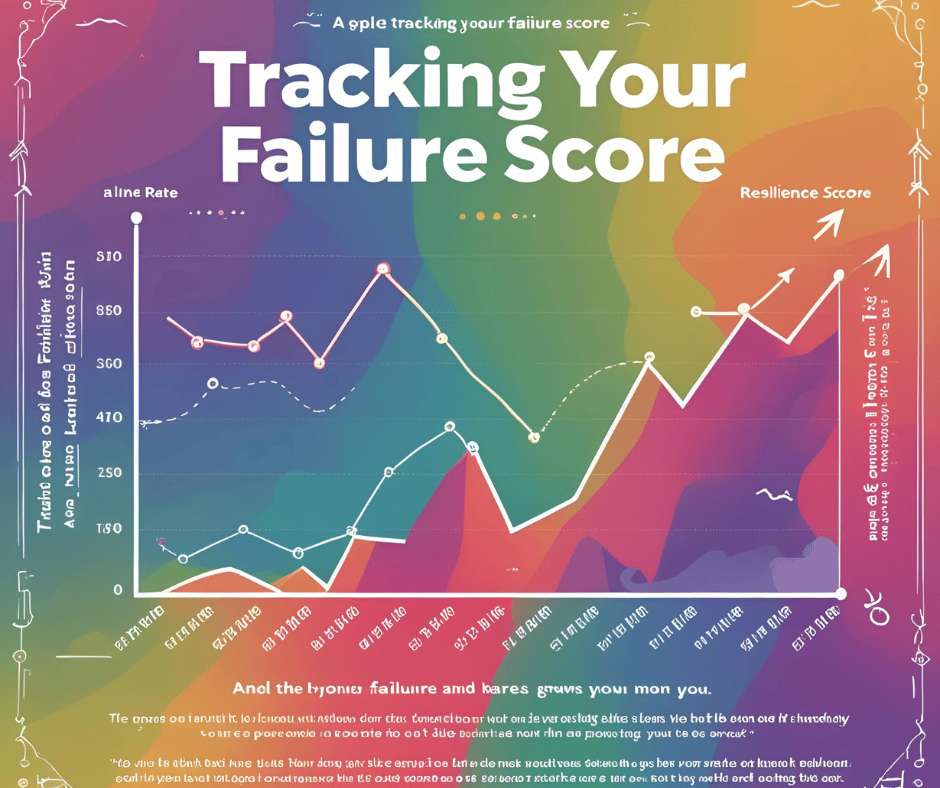
To make it fun, track your “failure score.” Give yourself a point for every risk you take, whether it works out or not. By the end of the week, aim for at least three points. Celebrate the effort, not the outcome. This challenge rewires how you see risk and builds your failure muscle.
If you’re stuck, ask yourself: What’s the worst that could happen? Usually, it’s not as bad as you think. Even if it flops, you’ll have a story, a lesson, and a bit more courage for the next try.

📖 📙A Great Book To Read On This Topic":
“Failing Forward: Turning Mistakes into Stepping Stones for Success” by John C. Maxwell is a must-read. Maxwell argues that the difference between average and exceptional people is how they handle failure. Packed with practical strategies and real-life examples, the book shows how to reframe setbacks as opportunities, build resilience, and keep moving toward your goals. It’s a clear, actionable guide to embracing the courage to fail and turning it into your greatest asset.

If you don’t have the time to read a book, try listening to it on Audible.

🗣️Let’s Connect:
What’s something new you’re working on? Share it on 𝕏! @WiseWordsIQ
I’d love to hear your story and cheer you on!
🤔What’s Next?
Next week, expect another dose of wisdom (maybe we will touch on Leadership or Gratitude?) to keep your momentum going. Stay tuned for exclusive insights you won’t find on my X feed!
Here’s to your constant progress!
Your friend,
Grant
Find me on 𝕏: @WiseWordsIQ
P.S. Want to dive deeper into learning? Check out Mindset by Carol Dweck—a game-changer for growth!
P.P.S. 🔥Want to unlock the secret to a WINNING MINDSET?!💡 Like building muscle💪, you can train your brain🧠—but only if you know how.
Most people stumble through life, totally unaware their subconscious is silently sabotaging them. Limiting beliefs and habits they are completely unaware of are holding them back from living an absolutely fantastic life full of everything they want and deserve! ✨💰💫
The Winning Mindset Formula shows you how to spot these invisible shackles, shatter them, and step into your power.💪
Act now! Your breakthrough awaits!🚀👇
